Hello everybody,
I hope wheather in your county is better the here: in Italy we definitely have no summer.
This afternoon, my wish is to talk you abou one of the most amazing royal buliding we have in Italy: the Reggia di Caserta, north of Naples, in the region Campania, southern Italy.
Caserta could be also a good place for business trip or as a base of your holidays in the Gulf of Naples, in case the best hotels of Naples would be busy.
It has a popoulation of about 80,000 people, is perfectly linked to the motorway both to Rome or Naples direction and it has a nice old town, where to have a walk tasting a local gelato or having a good limoncello, the fantastic lemon liqueur typical of the Napolitan coast.
Of course, the jewel of the town is the Reggia di Caserta, the royal residence of the Spanish family Borboun, kings of Naples. It was the biggest palace and one of the biggest buildings of the 18th century and nowadays is one of the most visited spot of the entire region Campania, a very richful of art, nature and masterpieces area.
The Reggia is best known for its Barroque style but especially for its amazing and guge gardens that may remind the wonderful Royal Palace of Versailles, France.
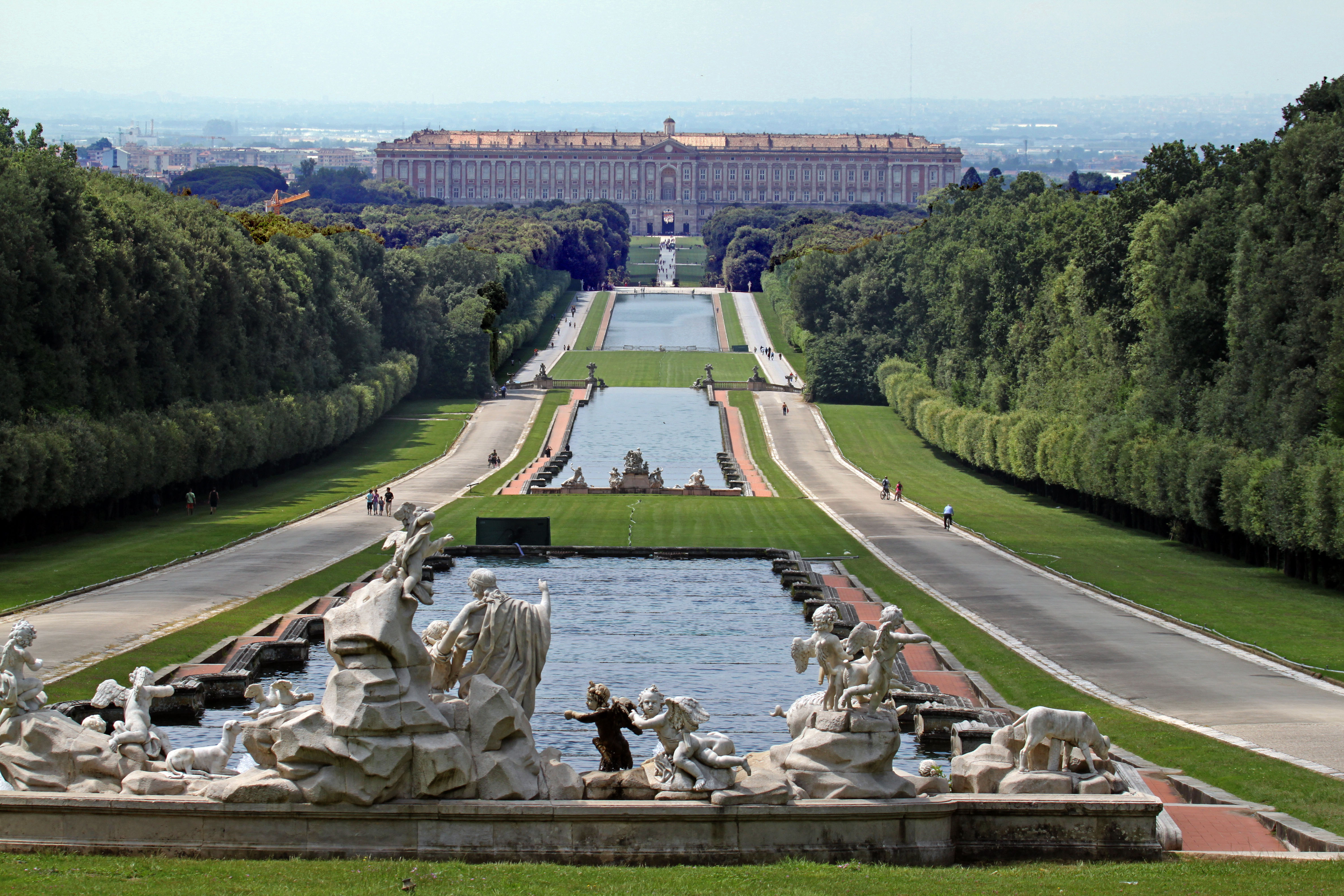 Today, after the visit of the palace with all its rooms, histories, paintings, pieces of furniture, I strictly reccommend to have a look to the royal gardens up to the highest fountain, the perfect place to have a total look of gardens and palace together, exactly like in the photo.
You can have a walk of about 1 hour return or take a bus (fee is one € per trip) or rent a coach with a horse and a charioteer.
I would like to show you some pictures of the palace inside, including the main stairs, the entire building from the main entrance and a couple of amazing rooms. This surely will encourage you for a visit. Closed on Tuesday.


And as I know that a long visit and an amazing walk in this enormous area will surely make you hungry, I have to finish my description with a couple of suggestion about food.
Of course, I will write about Naples in a separate section but Caserta itself has a big range of offer in term of food and wine. The Province of Caserta is known worldwide for its production of Mozzarella di bufala, a kind of mozzarella made with the milk of the domestic buffalo, born and nursed in the area.
Try your mozzarella lonely or with ham or onto the pizza Margherita, the classical one.
Not bad the salted anchovy and the lang sausage, just for the most fearless travellers!
The perfect end for your visit is a glass of a local wine: the Pallagrello, also called in a dialect word, the Rotondetto (from Rotondo, round) because of the shape of its grapes.
In the past, it was one of the favourite wine of the Borboun family! So, a perfect connection to the cultural visit!
Moreover, it is one of the very few cases of wine variety with both types of berry, white and red.


Try it in both varieties: Bianco with seafood and risotto or nero with meat, mozzarella and pastas.
Have a nice trip and see you soon!